Bravais lattice
Infinite array of points generated by discrete translations.

GreatStellatedDodecahedron · CC BY-SA 4.0
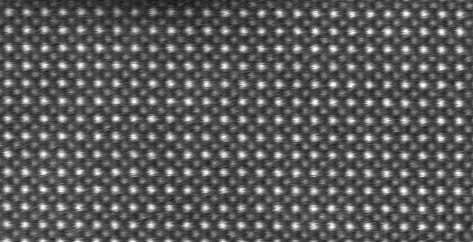
A Bravais lattice is an infinite array of discrete points in space, generated by a set of discrete translation operations such that the lattice appears identical from each lattice point. The lattice points are described by the vector R = n₁a₁ + n₂a₂ + n₃a₃, where nᵢ are integers and aᵢ are primitive translation vectors that span the lattice.
- field
- Geometry, Crystallography
- known_for
- Bravais lattice concept
Lore & Background
The Bravais lattice is used to formally define a crystalline arrangement and its frontiers. A crystal consists of one or more atoms, called the basis or motif, at each lattice point. The basis may be atoms, molecules, or polymer strings, and the lattice provides their locations. Two Bravais lattices are often considered equivalent if they have isomorphic symmetry groups. In this sense, there are 5 possible Bravais lattices in 2-dimensional space and 14 in 3-dimensional space. The 14 Bravais lattices are lattice types, not space groups; they describe the translational symmetry of a crystal, whereas space groups include both translational and point symmetries. In the context of space group classification, Bravais lattices are also called Bravais classes, Bravais arithmetic classes, or Bravais lattices.
Reader's Guide
The Bravais lattice concept is central to crystallography, providing the mathematical framework for describing the periodic structure of crystals. In two dimensions, there are 5 Bravais lattices grouped into four lattice systems, each defined by the relative lengths of cell edges and the angle between them. In three dimensions, there are 14 Bravais lattices, obtained by combining one of seven lattice systems with one of four centering types: primitive (P), base-centered (S), body-centered (I), or face-centered (F). Not all combinations are needed, as some are equivalent. The unit cell, which comprises the space between adjacent lattice points and any atoms in that space, can be primitive (smallest possible, containing exactly one lattice point) or conventional (smallest with full symmetry, containing an integer multiple of lattice points). The concept extends to four dimensions, where there are 64 Bravais lattices, grouped into 23 crystal families and 33 lattice systems. The Bravais lattice remains a foundational tool for understanding crystal symmetry and structure.
Did You Know?
- There are 5 possible Bravais lattices in 2-dimensional space and 14 in 3-dimensional space.
- The 14 Bravais lattices are lattice types, not space groups; they describe translational symmetry, while space groups combine translations with point symmetries.
- A primitive cell is the smallest possible unit cell and contains exactly one lattice point.
- In four dimensions, there are 64 Bravais lattices, grouped into 23 crystal families and 33 crystal systems.
The Geometry of Infinite Repetition
A Bravais lattice, a concept formalized in 1850 by Auguste Bravais, describes an infinite collection of discrete points arranged so that the local environment around every single point is identical. This perfect self-similarity is generated entirely by a set of discrete translation operations. In three-dimensional space, any lattice point can be reached by the vector sum R = n₁a₁ + n₂a₂ + n₃a₃, where the coefficients n₁, n₂, n₃ are arbitrary integers and the vectors a₁, a₂, a₃ are called primitive translation vectors. These three vectors must point in different directions, though they need not be mutually perpendicular, and together they span the entire lattice. A subtle but important feature is that the primitive vectors are not uniquely determined for a given lattice; different sets of three vectors can generate the very same infinite array of points. This non-uniqueness means that the mathematical description of a lattice carries a degree of freedom, and the physical symmetry of the arrangement is what truly matters rather than any particular coordinate choice.
Unit Cells: The Building Blocks
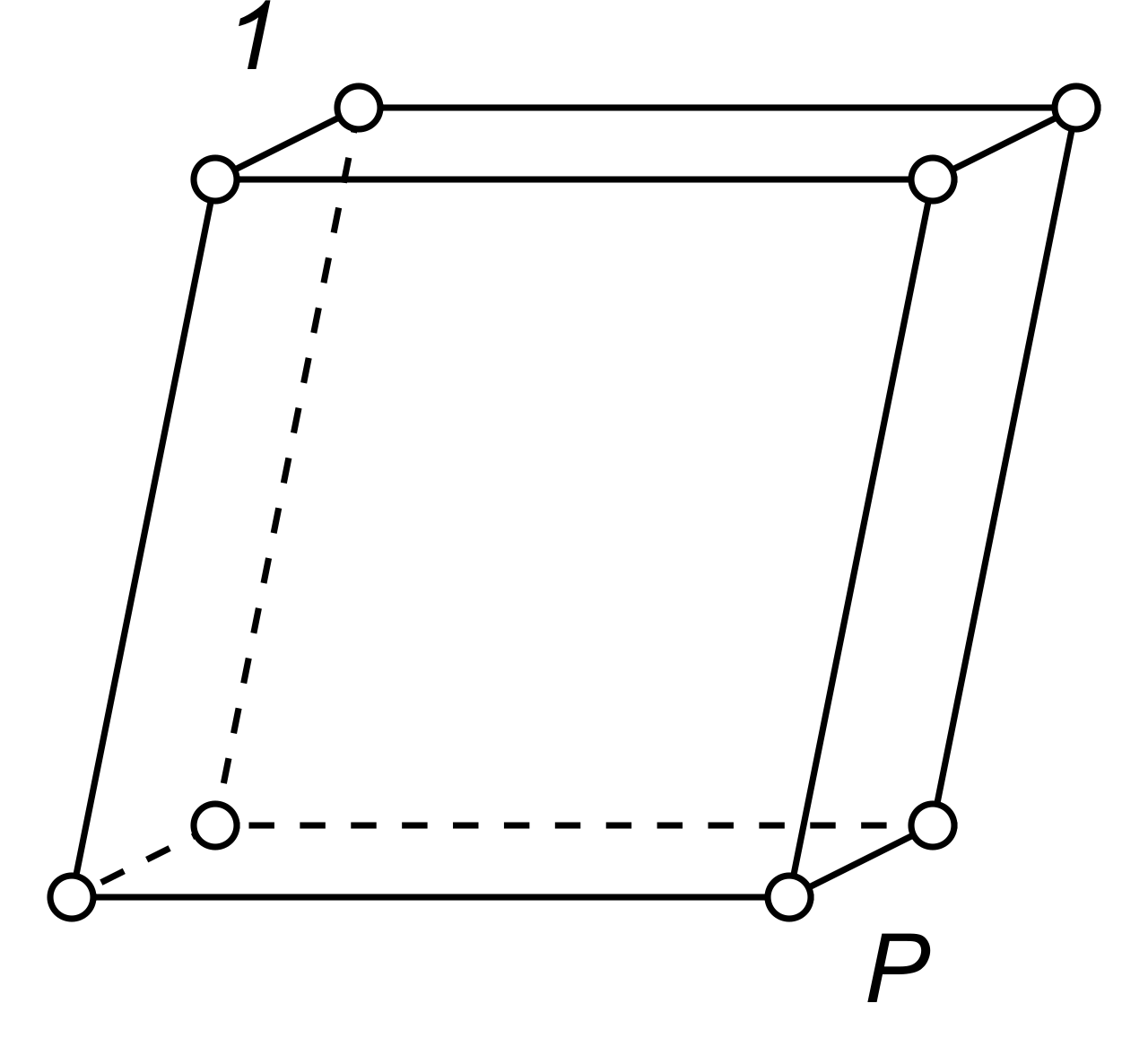
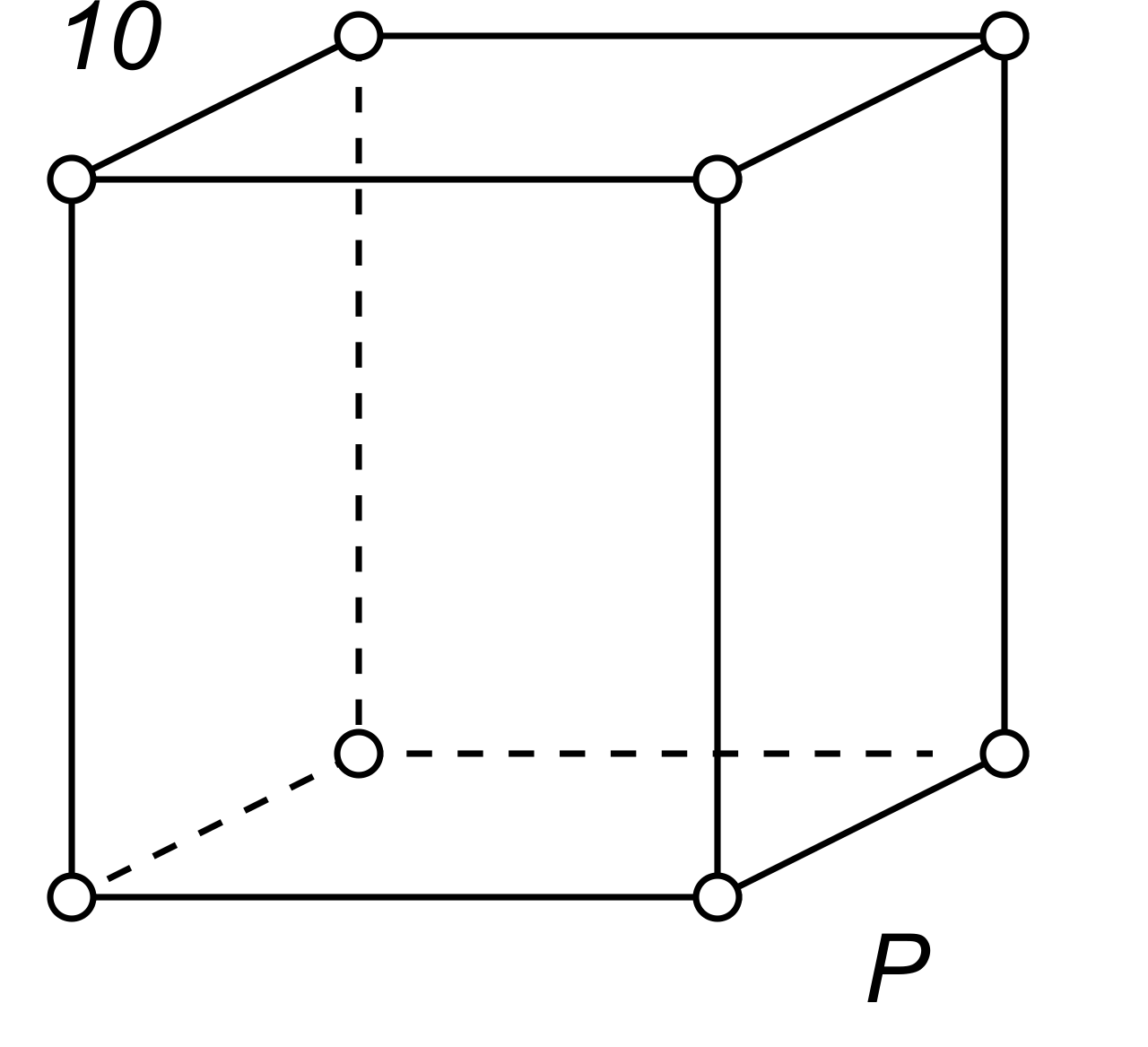
The unit cell is the fundamental geometric fragment that, when repeatedly translated, fills all of lattice space without any gaps or overlaps. In n dimensions it takes the shape of a parallelotope—a parallelogram in two dimensions and a parallelepiped in three. Two principal varieties exist. A primitive cell is the smallest repeatable fragment and contains exactly one lattice point; it is the minimal unit from which the whole infinite array can be reconstructed. However, a primitive cell does not always make the symmetry of the lattice visually obvious. In such cases crystallographers turn to a conventional cell, defined as the smallest unit cell that displays the full symmetry of the arrangement. The conventional cell's volume is always an integer multiple—specifically 1, 2, 3, or 4 times—that of the primitive cell, and the extra lattice points it contains sit at well-defined centering positions within the cell. This distinction between the minimal and the symmetry-revealing cell is central to how crystallographers communicate and compare different lattice types.
Fourteen Lattices in Three Dimensions
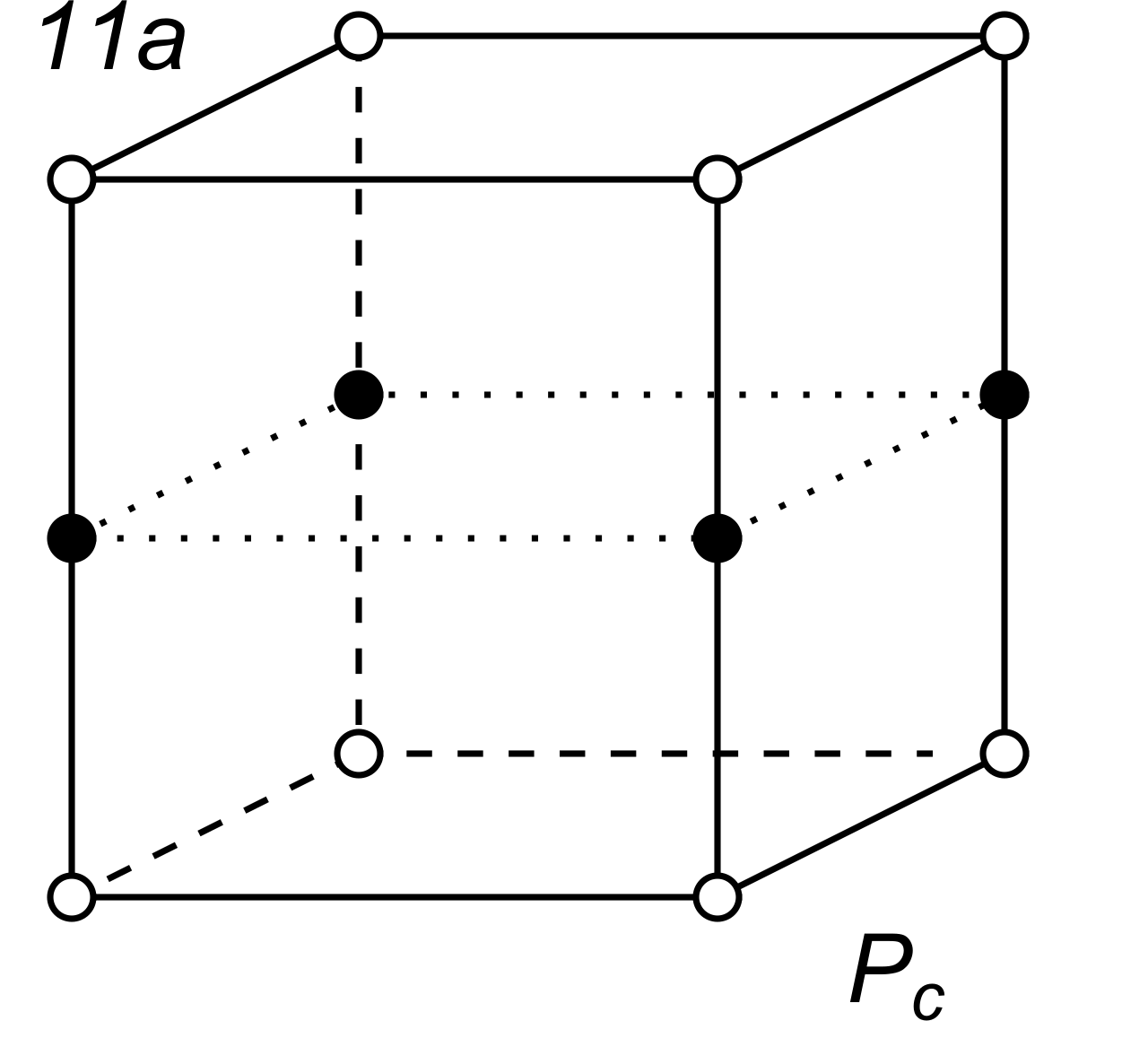
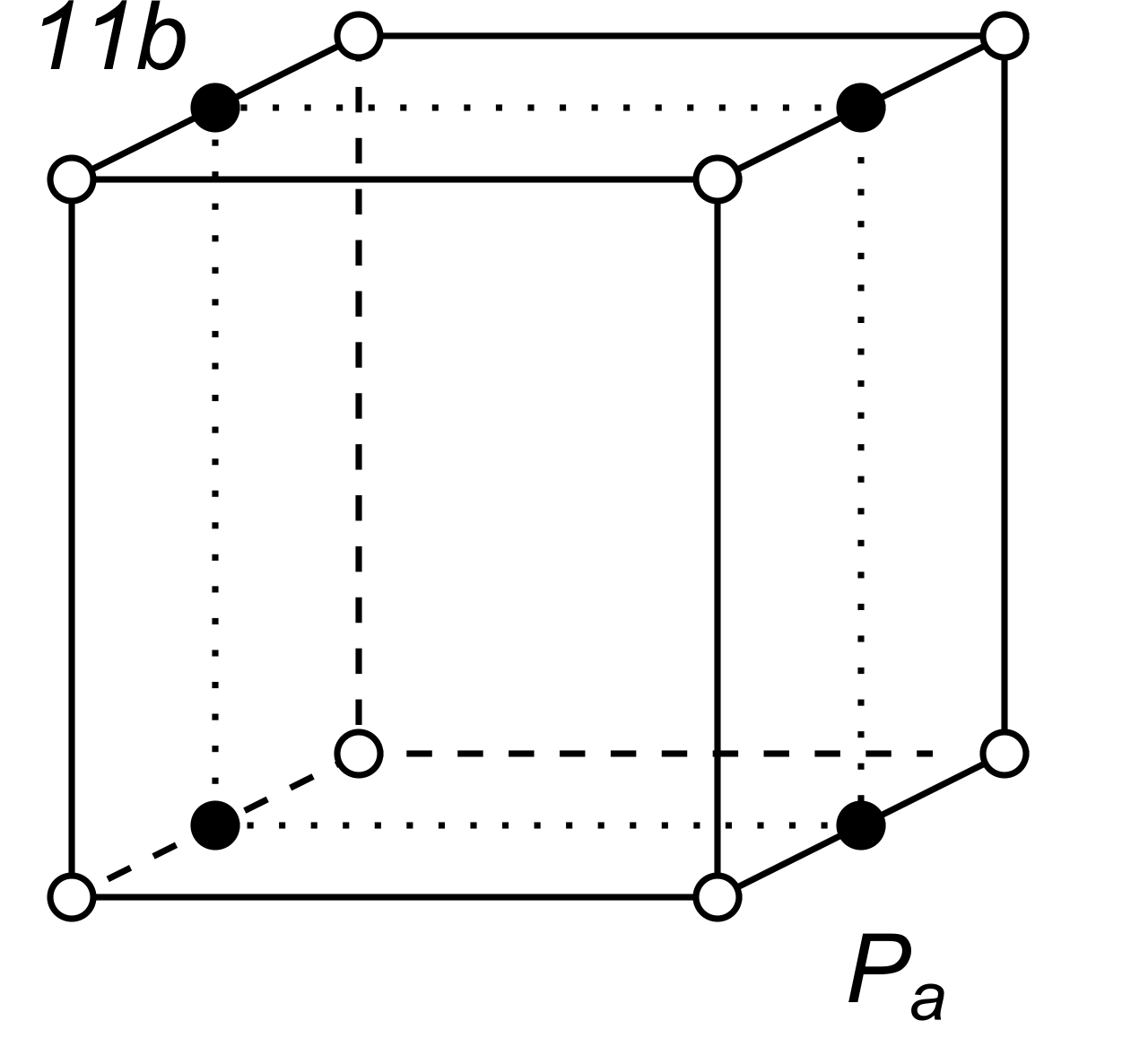
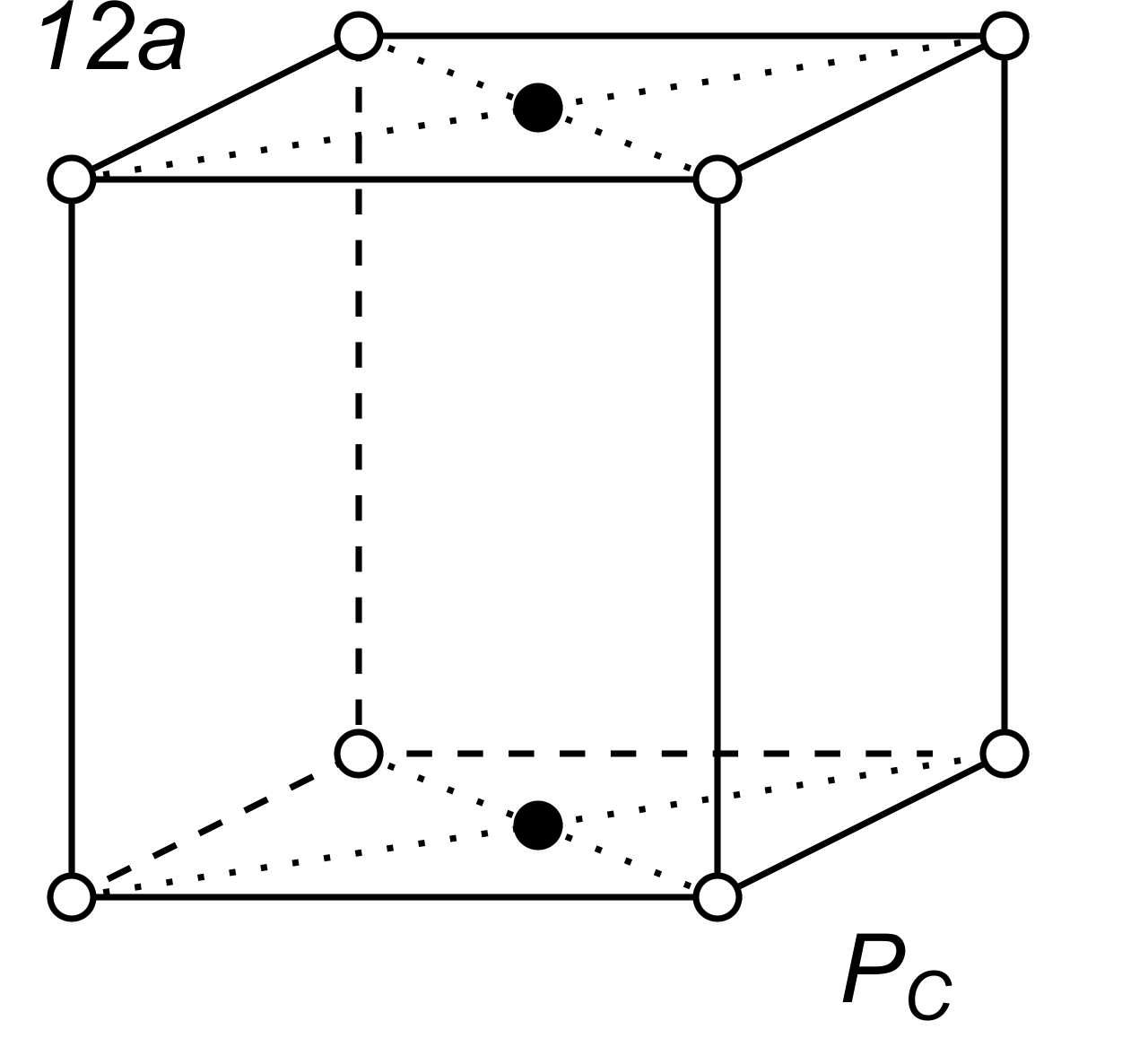
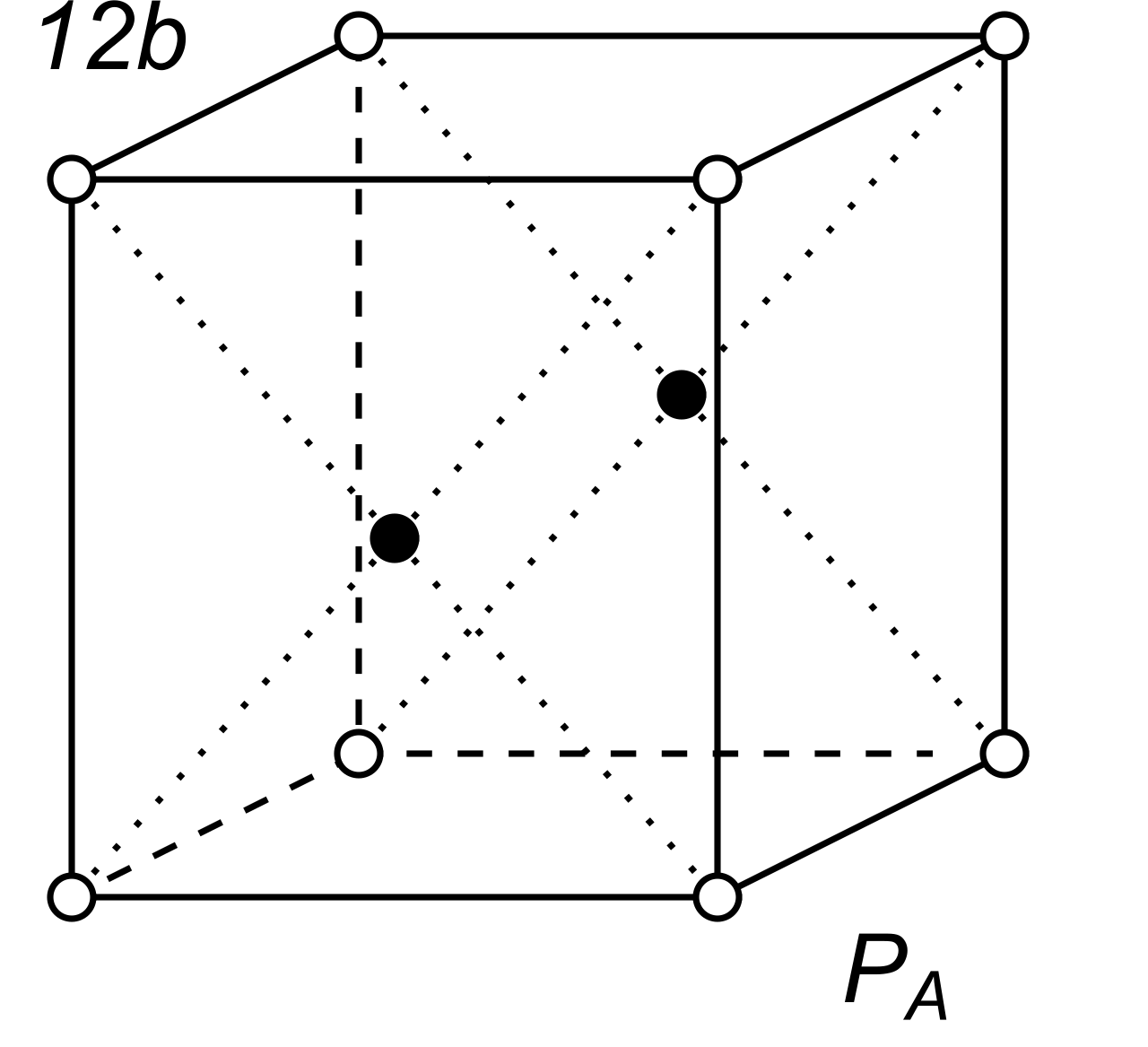
In three-dimensional space the Bravais lattice family comprises exactly 14 members, derived by pairing one of seven lattice systems with one of four centering types. The centering types specify where lattice points sit within the unit cell: Primitive (P) places points only at the eight corners; Base-centered (S, also labeled A, B, or C) adds one point at the center of one pair of parallel faces; Body-centered (I) adds a single point at the cell's geometric center; and Face-centered (F) adds one point at the center of every face. In principle this yields 28 combinations, but many are redundant. For instance, a body-centered monoclinic lattice can be redescribed as a base-centered monoclinic lattice simply by choosing different crystal axes, and any A- or B-centered lattice can be recast as either C-centered or primitive. Eliminating these equivalences leaves precisely 14 distinct conventional Bravais lattices. By contrast, two-dimensional space admits only five Bravais lattices grouped into four lattice systems.
Defining the Crystal and Its Classification
The Bravais lattice is not merely an abstract point array; it is the formal framework that defines a crystalline arrangement and its finite boundaries. A real crystal is constructed by placing a basis—also called a motif—at every lattice point. That basis may be a single atom, a molecule, or even a polymer chain, and the lattice supplies the precise locations at which these motifs are repeated. Two Bravais lattices are regarded as equivalent when their symmetry groups are isomorphic, a criterion that underpins the entire classification scheme. Within the broader taxonomy of the 230 space groups, the 14 three-dimensional Bravais lattices occupy a special place and are also referred to as Bravais classes, Bravais arithmetic classes, or Bravais flocks. The concept, introduced by Auguste Bravais in 1850, thus bridges pure geometry and the physical description of solid matter, providing the universal language in which crystallographers specify the periodic order of atoms, molecules, and macromolecules in crystalline materials.
Gallery
Frequently Asked Questions
Who is Bravais lattice?
Bravais lattice is not a person but a foundational concept in crystallography and geometry: an infinite, repeating array of discrete points in space. It is named after the French mineralogist Auguste Bravais, who formalized the classification of such periodic point arrangements in the 1850s.
What are Bravais lattice's powers and role?
Its defining 'power' is that every point can be reached by integer combinations of three primitive translation vectors, expressed as R = n₁a₁ + n₂a₂ + n₃a₃. This means the pattern looks identical no matter which lattice point you stand on, making it the mathematical backbone for describing all periodic crystal structures.
How does Bravais lattice's story end?
It doesn't, in any literal sense—the lattice extends infinitely in every direction with no boundary or final point. In practice, crystallographers truncate it to a finite crystal, but the idealized lattice itself has no terminus.
Why is Bravais lattice important to the field?
It provides the minimal repeating framework that, combined with a basis of atoms, generates every possible periodic crystal structure. There are exactly 14 distinct Bravais lattices in three dimensions, and they underpin the 230 space groups used to classify all crystalline materials.
What's Bravais lattice's origin story?
The idea grew out of 19th-century French crystallography, where Bravais demonstrated that any periodic arrangement of points in space could be built from a small set of translation vectors. His work unified earlier empirical descriptions of crystal symmetry into a rigorous geometric language still used today.
More in Crystallography 1-20
Spotted an error? Know more?
This is a living reference — every entry is fact-audited, and reader corrections feed straight into our audit queue. Suggest an edit · See this site's audit record