Crystal growth
Process of adding particles to a crystalline lattice after nucleation.

LaMèreVeille · CC BY-SA 4.0
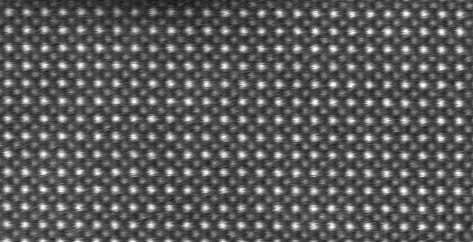
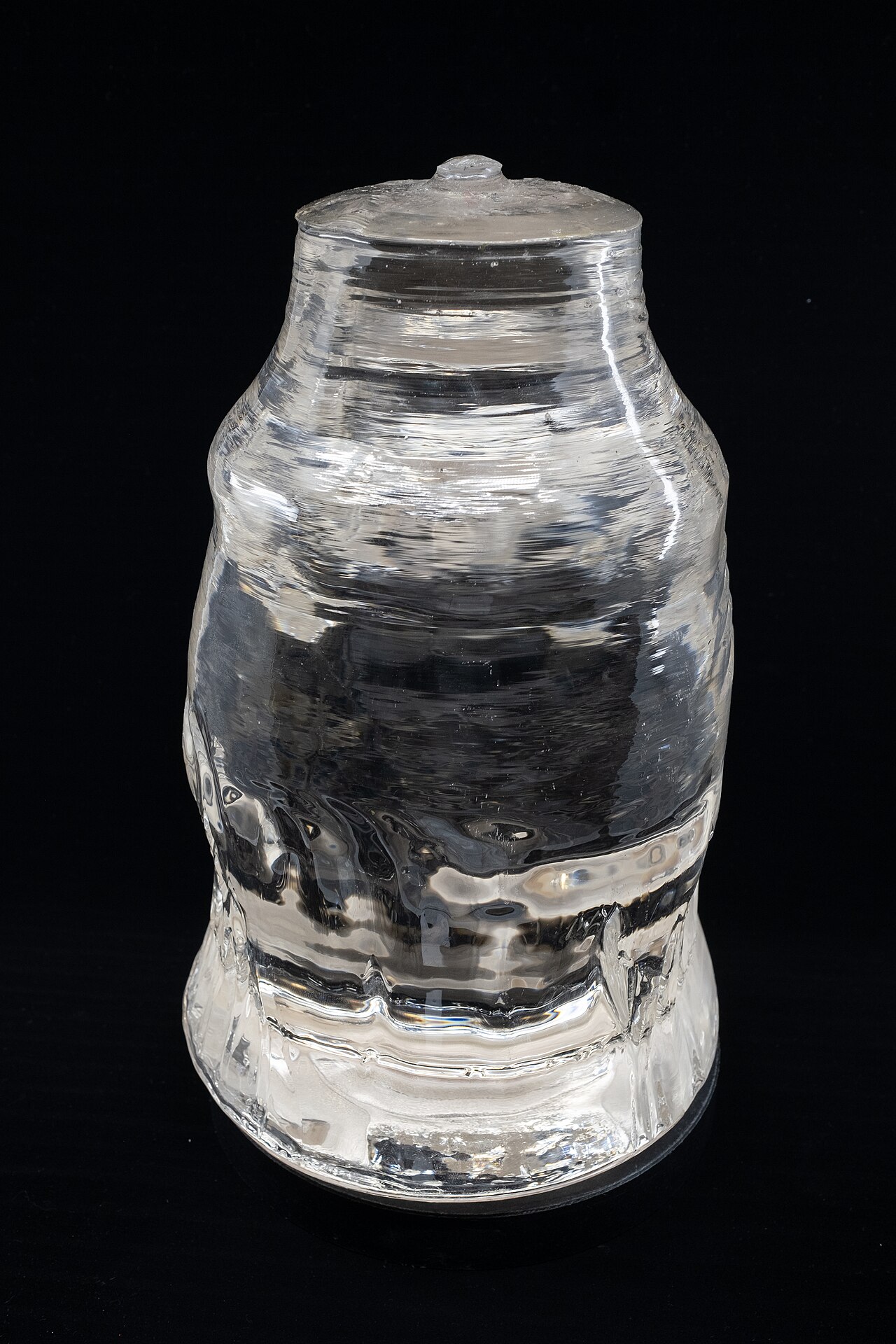
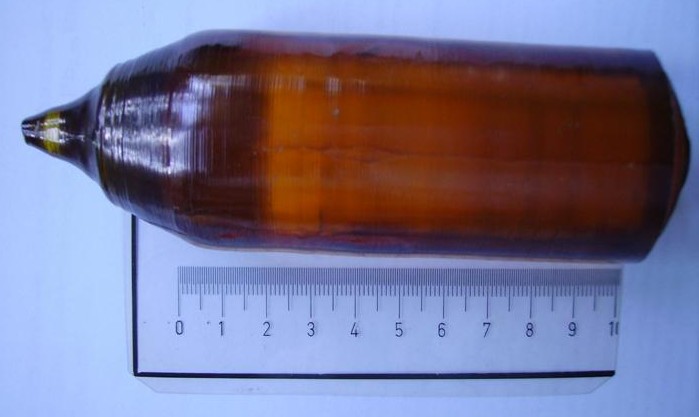
Crystal growth is a major stage of a crystallization process, consisting of the addition of new atoms, ions, or polymer strings into the characteristic arrangement of the crystalline lattice. It typically follows an initial stage of nucleation, unless a seed crystal is already present, and yields a crystalline solid with atoms or molecules close packed in fixed positions.
- field
- Crystallography, Materials Science
- known_for
- Mechanisms of crystal growth from melt and vapor, including lateral and normal growth modes
- key_concepts
- Nucleation (homogeneous and heterogeneous), growth mechanisms, driving force, morphology
Lore & Background
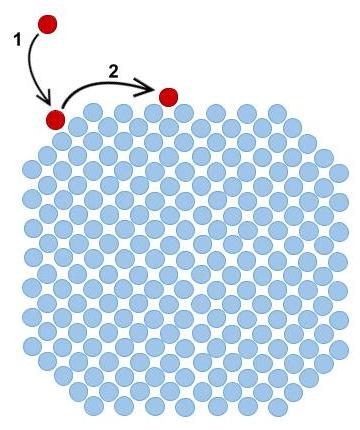
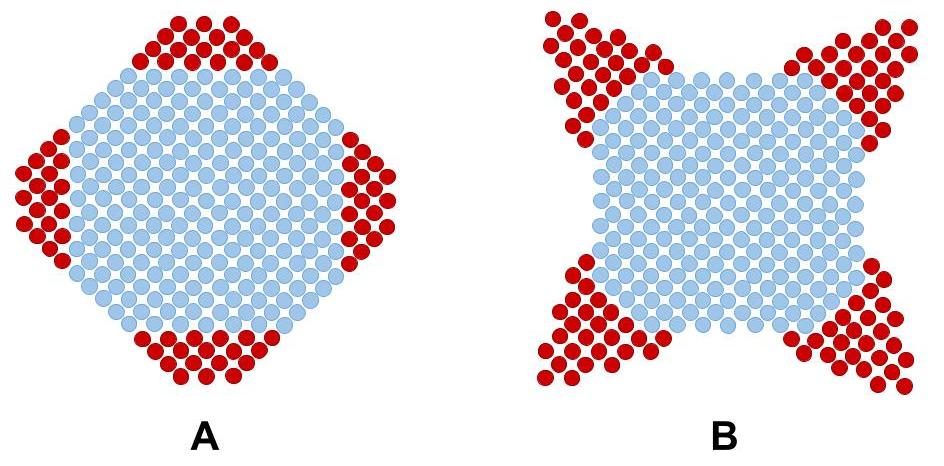
After successful formation of a stable nucleus, a growth stage ensues in which free particles adsorb onto the nucleus and propagate its crystalline structure outwards. This process is significantly faster than nucleation because real crystals contain dislocations and other defects that act as catalysts. Perfect crystals lacking defects would grow exceedingly slowly, while impurities can act as growth inhibitors or modify crystal habit. Nucleation can be homogeneous, without foreign particles, or heterogeneous, with foreign particles acting as a scaffold. Heterogeneous nucleation generally takes place more quickly, eliminating the need to create a new surface. Common methods include using small inclusions or scratches on container surfaces, or adding a foreign substance such as a string or rock to provide nucleation sites. The interface between a crystal and its vapor can be molecularly sharp at temperatures well below the melting point. Two major mechanisms of growth have been distinguished: non-uniform lateral growth, where the surface advances by lateral motion of steps one interplanar spacing in height, and uniform normal growth, where the surface advances normal to itself without stepwise growth. The operative mechanism depends on whether the surface is diffuse or sharp, and whether it is singular or non-singular.
Reader's Guide
Crystal growth is fundamental to understanding crystallization processes in both natural and industrial contexts. The distinction between homogeneous and heterogeneous nucleation explains why scratches or added seeds can control crystal formation, a principle applied in laboratory and manufacturing settings. The identification of two growth mechanisms—lateral step growth and uniform normal growth—provides a framework for predicting how crystals develop under different thermodynamic driving forces. The concept of a critical driving force, above which uniform growth occurs and below which lateral growth is required, links thermodynamics to observable crystal morphology. The study of crystal growth also connects to mechanical properties, as seen in whisker growth, where defect-free whiskers exhibit high tensile strength. This knowledge underpins the production of crystalline materials with desired sizes, shapes, and properties.
Did You Know?
- Crystal growth is significantly faster than nucleation because real crystals contain dislocations and other defects that act as catalysts.
- A badly scratched container can result in many lines of small crystals, while a smooth container may prevent crystal formation entirely.
- The interface between a crystal and its vapor can be molecularly sharp at temperatures well below the melting point.
- Prior to the discovery of carbon nanotubes, single-crystal whiskers had the highest tensile strength of any materials known.
The Munich Conversation and the First Diffraction Experiment
The notion that a crystal could serve as a natural diffraction grating for X-rays was born from a conversation in Munich's English Garden in 1912. Paul Peter Ewald, who had proposed a resonator model of crystal structure for his doctoral thesis, faced a practical obstacle: visible light's wavelength was far too large relative to the spacing between his hypothetical resonators to test the model experimentally. Max von Laue recognized that shorter-wavelength electromagnetic radiation was required and suggested that X-rays, whose wavelengths matched unit-cell spacings, might be suitable. He enlisted laboratory technicians Walter Friedrich and Paul Knipping to direct an X-ray beam through a copper sulfate crystal and photograph the resulting pattern. The developed plate displayed a striking array of well-defined spots organized in intersecting circles around the central beam spot. The team presented their findings to the Bavarian Academy of Sciences and Humanities in June 1912, titling the work "Interference phenomena in X-rays." Von Laue then derived a law connecting scattering angles to the dimensions and orientation of unit-cell spacings, an accomplishment that secured him the 1914 Nobel Prize in Physics.
From Snowflakes to Symmetry Laws
Crystals had long captivated observers with their geometric regularity, yet systematic scientific study of their internal architecture did not begin until the seventeenth century. In 1611, Johannes Kepler speculated in his treatise on hexagonal snow that the six-fold symmetry of snowflakes arose from a regular packing of spherical water particles. Decades later, Nicolas Steno in 1669 established through experimental work that the angles between faces remain constant for any given crystal type, a principle now recognized as the law of constancy of interfacial angles. René Just Haüy advanced the field in 1784 by demonstrating that every crystal face could be described through simple stacking patterns of identical blocks, a finding he termed the law of decrements. This insight ultimately gave rise to the concept of a Bravais lattice, in which one unit cell repeats endlessly along three principal axes. William Hallowes Miller formalized the identification of crystal faces in 1839 by assigning each a distinctive set of three small integers, the Miller indices still employed today. By the late nineteenth century, a complete catalog of possible crystal symmetries had been compiled by Hessel, Bravais, Fedorov, Schönflies, and Barlow, whose 1880s structural proposals were later confirmed by X-ray diffraction.
Transforming Science from Atoms to Medicine
X-ray crystallography has served as a cornerstone across numerous scientific disciplines since its earliest decades of use. In its initial period, the technique established atomic dimensions, bond lengths, and bond types, and it revealed the atomic-scale distinctions between different materials, particularly minerals and alloys. The method's reach extended deeply into biology, where it illuminated how vitamins, therapeutic agents, proteins, nucleic acids such as DNA, and viruses are organized and operate. Today it remains the principal technique for characterizing the atomic structure of materials and for distinguishing substances that appear indistinguishable through other experimental approaches. Beyond mere structural identification, crystallographic data can illuminate unusual electronic or elastic properties of a material, clarify chemical interactions and processes, and provide the structural foundation for designing pharmaceuticals targeting specific diseases. The breadth of these applications underscores why the method continues to be indispensable across physics, chemistry, materials science, and medicine.
The Modern Workflow from Sample to Database
Modern crystallographic work follows a carefully sequenced series of steps, each critical to the final result. The preliminary phase demands the preparation of high-quality samples, meticulous recording of diffracted intensities, and careful data processing to eliminate artifacts. Once clean data are in hand, a variety of computational approaches—collectively termed direct methods—are employed to obtain an initial estimate of the atomic structure. With that starting point, further techniques such as difference maps are applied to complete the structural model. The final stage involves a numerical adjustment of atomic coordinates to best match the experimental measurements, at times supported by ab-initio calculations. In nearly all cases, the completed structures are submitted to publicly accessible databases so that the broader research community can build upon them, ensuring that each new determination contributes to a shared global knowledge base rather than remaining isolated in a single laboratory.
Gallery


Frequently Asked Questions
What is Crystal growth in the context of Chapters 1–20?
Crystal growth is the stage of crystallization in which new atoms, ions, or polymer chains are incorporated into the existing lattice arrangement. It comes after nucleation (or begins directly from a seed crystal) and produces a solid whose particles sit in fixed, close-packed positions.
How does Crystal growth relate to Nucleation?
Nucleation is the prerequisite step that creates the first stable cluster of particles, while Crystal growth is the subsequent phase where that cluster expands by absorbing additional material. The two are distinct but sequential: without a nucleus (or a pre-existing seed), there is no lattice for growth to attach to.
What are the two main growth modes fans keep asking about?
The canon highlights lateral growth (spread along a crystal face) and normal growth (advance perpendicular to the face). Both operate from melt or vapor sources and together determine the final morphology of the crystal.
What is the driving force behind Crystal growth?
The thermodynamic push comes from the system's tendency to lower its free energy by moving material from a supersaturated or supercooled state into the ordered lattice. This energy gradient is what makes atoms or molecules keep attaching rather than detaching.
Why do fans consider Crystal growth a pivotal topic in the Crystallography series?
It bridges the abstract concept of a lattice with the practical reality of making real materials, linking nucleation theory, morphology, and growth kinetics into one coherent picture. Mastering this stage is what lets a reader predict or control the shape and quality of a finished crystal.
More in Crystallography 1-20
Spotted an error? Know more?
This is a living reference — every entry is fact-audited, and reader corrections feed straight into our audit queue. Suggest an edit · See this site's audit record