Crystallite
Small crystals that form the grains of most solid materials.

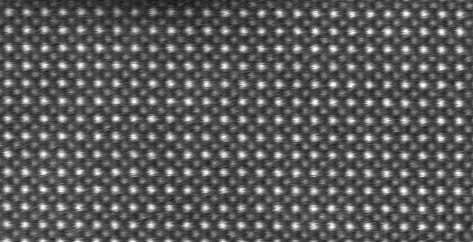
A crystallite is a small or even microscopic crystal that forms, for example, during the cooling of many materials. Crystallites are also referred to as grains. They are the building blocks of polycrystalline materials, which constitute most inorganic solids, including common metals, ceramics, rocks, and ice.
- also_known_as
- grains
- related_term
- bacillite (long thin needle-shaped crystallite)
- size_range
- from a few nanometers to several millimeters
- found_in
- polycrystalline materials, including metals, ceramics, rocks, ice
- key_property
- orientation can be random (random texture) or directed
- boundary_term
- grain boundaries
Lore & Background
Crystallites form during the cooling of many materials. Their orientation can be random, producing random texture, or directed due to growth and processing conditions. Polycrystalline materials are solids composed of many crystallites of varying size and orientation, held together by thin layers of amorphous solid. Most inorganic solids are polycrystalline, including all common metals, many ceramics, rocks, and ice. A related term, oligocrystalline material, refers to a microstructure consisting of a few coarse grains, often columnar and parallel to the longitudinal ingot axis, as found in ingots produced by electron beam melting.
Reader's Guide
Crystallites are fundamental to understanding the physical properties of most solid materials. The extent to which a solid is crystalline (crystallinity) has important effects on its properties. For example, sulfur, while usually polycrystalline, may occur in other allotropic forms with completely different properties. Grain boundaries, where crystallites meet, disrupt the motion of dislocations, making grain size reduction a common way to improve strength via the Hall–Petch relationship. However, fine-grained materials have poor resistance to creep relative to coarser grains, especially at high temperatures. Grain boundaries are also preferred sites for corrosion and precipitation of new phases. In nanocrystalline solids, grain boundaries become a significant volume fraction, profoundly affecting diffusion and plasticity. The orientation of crystallites influences whether a material is isotropic or textured, affecting predictions of behavior. Abnormal grain growth can result in mechanical and optical properties that diverge from similar materials with a monodisperse crystallite size distribution.
Did You Know?
- Crystallites are also referred to as grains.
- Bacillite is a long thin needle-shaped crystallite, rodlike with parallel longulites.
- Grain boundaries are generally only a few nanometers wide.
- In nanocrystalline solids, as grain boundary volume fraction approaches 100%, the material becomes an amorphous solid.
More in Crystallography 1-20
Spotted an error? Know more?
This is a living reference — every entry is fact-audited, and reader corrections feed straight into our audit queue. Suggest an edit · See this site's audit record